
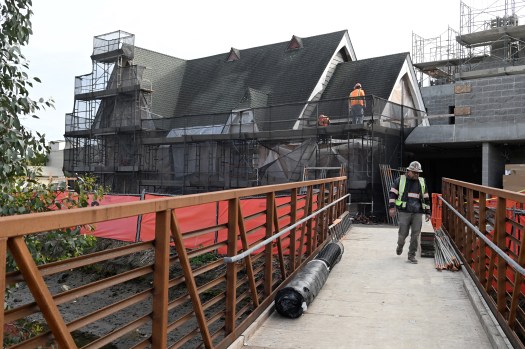
WildCare, the nonprofit animal clinic in San Rafael, is on track to reopen this fall when its two-year, $24 million renovation is expected to finish.
The organization’s 35 employees and 150 volunteers have been using a temporary site on North San Pedro Road to treat wildlife. WildCare plans to move the staff and animals back into the nonprofit’s home on Albert Park Lane by early November.
“We’re really excited about this space,” Ellyn Weisel, the executive director, said Monday at the construction site. “We will continue to be open to the public for free so that families, children, school groups and a lot of our nonprofit partners can come out and enjoy these spaces.”
“This was all done with private donations and foundations,” Weisel said of the project. “We’re giving this as a gift to Marin, Northern California and the city of San Rafael.”
The nonprofit has raised nearly $20.3 million toward its $24 million goal for the renovations. Private donors have offered $2 million in matching funds to help reach the target.
“This match is focused on every level of donation,” said Nicole Trautsch, WildCare’s fundraising director. “So five dollars matter, lemonade stands matter. We’re really hoping that every single person in the community feels to be a part of this.”
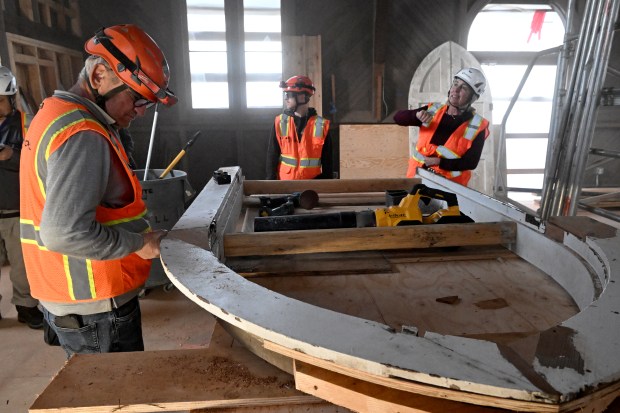
On Monday, Weisel and Cahill Contractors project engineer Hunter Mahan led a tour through the bare rooms of the future three-story hospital and the historic building that housed WildCare’s education center for decades. The overall center is 11,400 square feet.
Workers lifted and moved the former 19th century parish building three times during construction. Now they are restoring its interior. The building was constructed from the hull of a ship.
“Here it is and hopefully in its final resting place,” Weisel said.
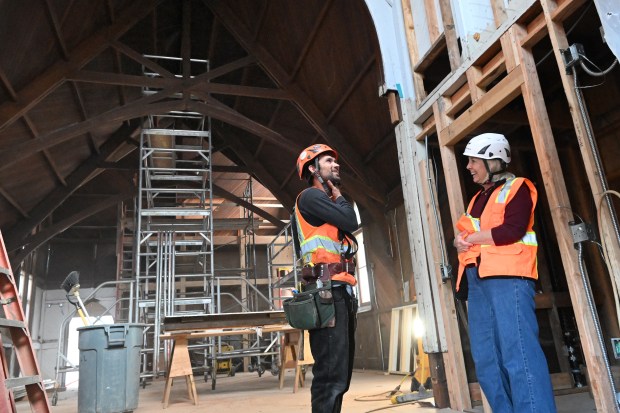
Connor Harvard, a Cahill worker who grew up in San Anselmo, stood in the historic building’s main room. He recalled visiting WildCare as a child.
“What’s funny, I was thinking the other day about going to some place in San Rafael that had all of these weird animals and I didn’t know what it was,” Harvard said. “Oh yeah, it’s here.”
The center will have 40 rooms as well as rooftop areas for birdcages. One notable resident will be Sequoia the northern spotted owl, who has been among a who’s who of WildCare animal ambassadors for the past 20 years.
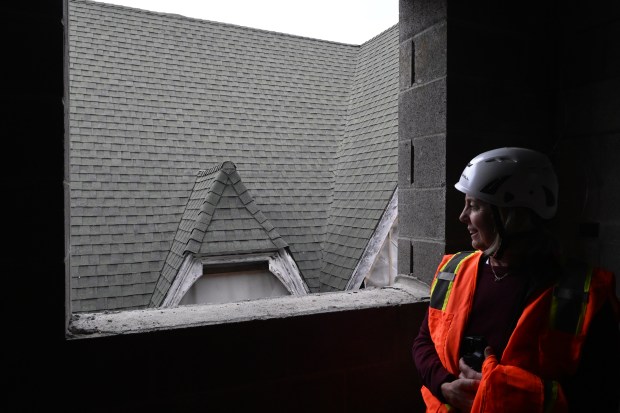
“We are building to elevate the organization in general,” Trautsch said.
Birds infected with diseases such as avian flu will be placed in quarantine rooms.
The staff doesn’t expect its patient load to increase when the restored center reopens, Trautsch said. The organization has treated the same number of animals a year, about 3,500, for the past 17 years, she said.
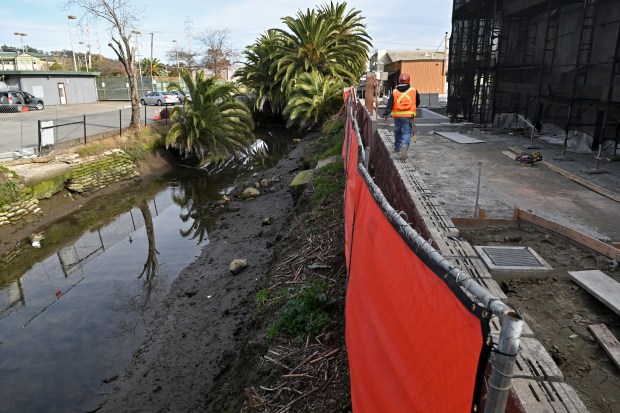
The contractors also installed a new bridge that stands 12 feet above the bed of San Rafael Creek to meet disability access laws and withstand flooding.
Weisel said solar panels will be installed on a rooftop, saving WildCare an estimated $1 million in energy costs over 25 years. The future hospital’s energy system is also designed to store enough power to provide eight hours of backup in case of an outage.
Last year, the staff had to take baby animals and birds home during a blackout at the temporary clinic, Weisel said.
After the Albert Park Lane site reopens, WildCare will still use the temporary site to keep treated animals until they are ready to be released into the wild. Weisel said the nonprofit extended its lease with San Rafael City Schools to stay there.
“WildCare treats thousands of wild animal patients each year and educates thousands of people through its programs,” San Rafael Mayor Kate Colin said Tuesday. “It’s one of the most tangible ways our community connects with the natural world around us, and provides a place for sick and injured animals to be treated.”
Jeff Boehm, a leader at the Marine Mammal Center, the animal clinic in the Marin Headlands, said it congratulates WildCare as it nears the end of renovations.
“As fellow animal care and conservation organizations with deep roots here in Marin County, we greatly admire WildCare’s dedication to healing wildlife and inspiring the community through environmental education,” he said.
